Billy McConville
Say NothingBilly McConville’s childhood was shaped by his mother’s disappearance and by a succession of institutions that failed to protect him. Sent away from Belfast with his twin brother Jim at seven, he entered Kircubbin amid fear and uncertainty, and was subjected there to physical and sexual abuse. His later story belongs not only to the history of a family torn apart, but also to the consequences of placing vulnerable children in care where abuse was tolerated.
Childhood and institutional care
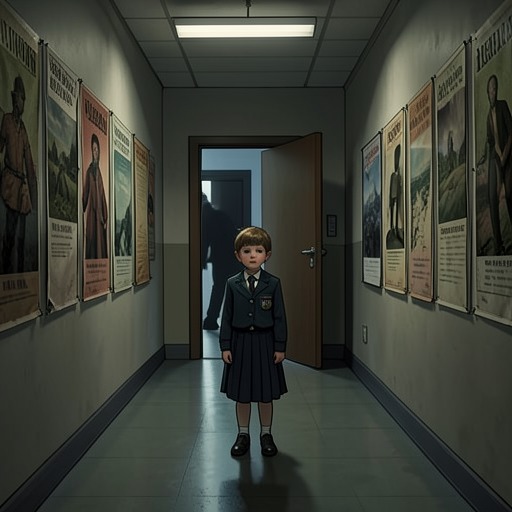
After their mother disappeared, the McConville children were taken into care. Billy and Jim initially went to Nazareth Lodge, a South Belfast orphanage where beatings and harsh punishment were routine. In March 1973, the twins were transferred from Nazareth Lodge to the De La Salle Boys’ Home near Kircubbin, in County Down. The journey took them away from the city and from their siblings; in the car, the seven-year-old boys were apprehensive about what awaited them.
At Kircubbin, Billy and Jim were the youngest residents. Older children assaulted them, and Billy was sexually abused by adults at the home. The boys had little recourse: abuse by staff was widespread and silently tolerated. The De La Salle Brothers later acknowledged that sexual abuse had been widespread there during this period. For the McConville children, the institutions intended to care for them instead added another source of trauma to a family already fractured by loss.
Family and Later Life
The record of Billy’s later life returns to the siblings from whom care had separated him. A 2017 report described him as having brought his family back together, making reunion part of his legacy as well as a consequence of the loss that had marked their childhood. That account gives no detailed chronology of how the family was reunited, but it places Billy at its centre: the child sent away with his twin became, in later life, a figure associated with restoring ties among his brothers and sisters.
Billy died of cancer in 2017. At his funeral, mourners remembered him as “strong and unbelievably brave.” The tribute sits beside the account of his childhood without erasing it: the abuse at Kircubbin and the disruption of the family remain part of his history, while the reports of his later life emphasize his place in a family brought back together.
Family Separation and Institutional Failure
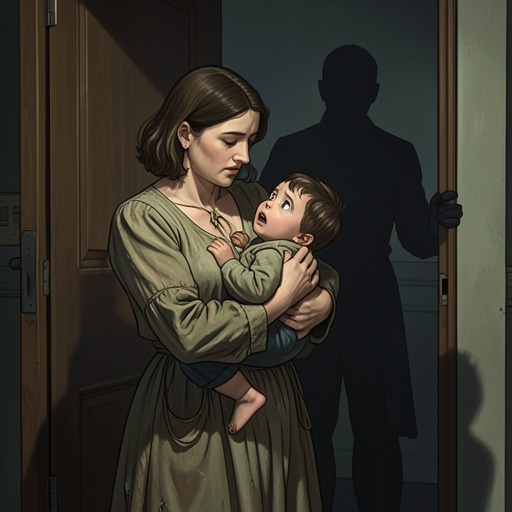
Before Billy and Jim were sent to Kircubbin, the McConville children had tried to remain together in their home, waiting in case their mother returned. When social welfare authorities intervened, their older sister Helen helped load the younger children into cars and reassured them that the separation would last only until their mother came back. The children were then divided among different circumstances: some were already elsewhere or old enough to fend for themselves, while Billy and several siblings entered care. The family’s rupture was therefore not a single departure but a scattering of children whose efforts to hold on to home could not withstand their mother’s disappearance and the authorities’ decisions.
The account of Billy’s childhood places his experience within a wider failure of protection. The institutions were meant to take responsibility for children separated from their family, yet the record describes harsh treatment at Nazareth Lodge and abuse at Kircubbin. The De La Salle Brothers later acknowledged that sexual abuse had been widespread at Kircubbin during this period. This context matters without making Billy’s experience interchangeable with those of his siblings: he was one of the seven-year-old twins sent there, and the evidence specifically records that he was abused by adults. In later accounts, his family’s reunion stands in stark contrast to the childhood dispersal; the reports identify him with bringing the family back together, though they do not detail how that work unfolded.
Institutional Legacy
The later acknowledgments distinguish the institutions’ failures without collapsing them into one account: the De La Salle Brothers admitted that sexual abuse had been widespread at Kircubbin, while the Sisters of Nazareth acknowledged a pattern of physical abuse at Nazareth Lodge. For Billy, the record places both institutions within the route through care that followed his mother’s disappearance, but identifies Kircubbin as the place where adults abused him. The distinction matters: his experience is part of a wider pattern, yet remains specifically documented as his own.
The consequences also extended beyond the events at the homes. The account notes that some McConville children developed a lasting fear of priests after their experiences in Catholic institutions; it does not specify which siblings, so that fear cannot be assigned to Billy alone. His story is preserved instead through a few sharply defined facts—his age, his transfer with Jim, the abuse he suffered, and the later acknowledgment of conditions at Kircubbin. That limited record makes the gap between institutional responsibility and children’s ability to obtain protection central to his place in the family’s history.